BACK
AisleScout - Locate groceries in seconds
Problem
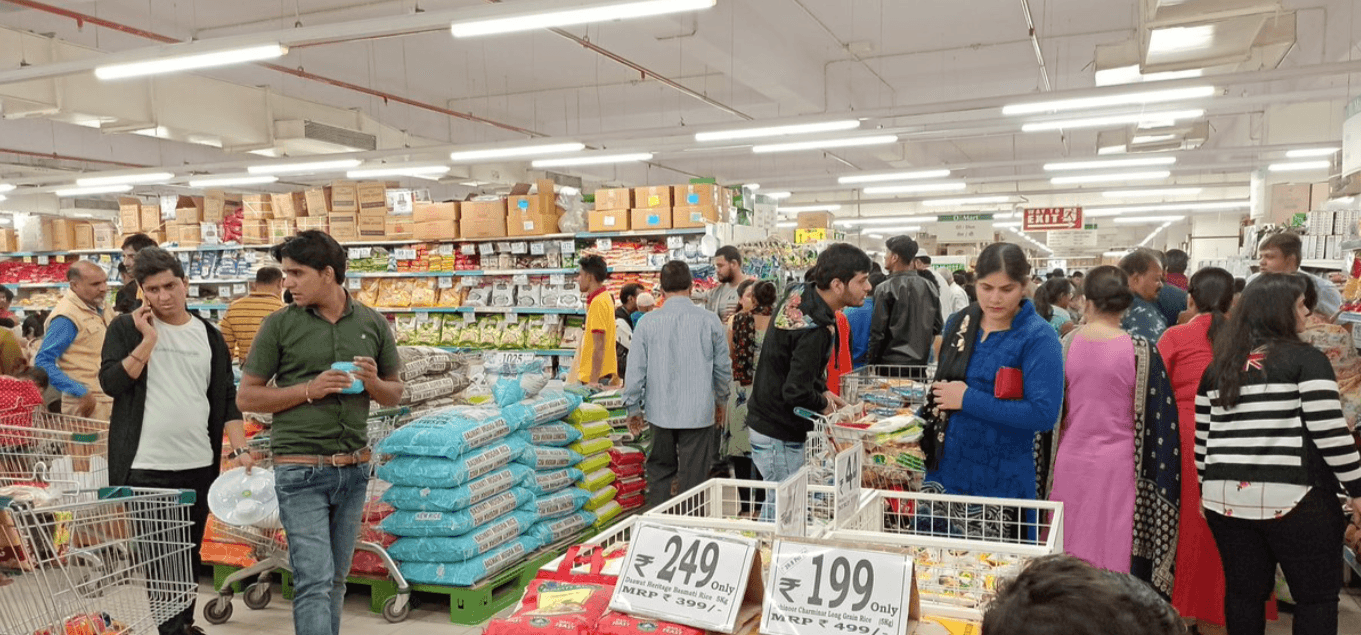
Omnichanneled marts in metropoltan cities of India often struggle with customers juggling through confused aisle routes and limited staff help to locate items they need especially during peak hours.
Objective
An app that helps in-store shoppers locate products with optimized store routes delivering a faster, more seamless shopping experience.
Research Insights
Observation
Due to labor shortages, store associates are often overworked and underpaid, leading to a decline in the quality of assistance and personalized attention to answer customer's product queries or help with stock.
Shoppers want to spend less time in crowded environments so they rely heavily on brand names and price heuristics rather than carefully inspecting product details making their visit more transactional and stressful than experiential.
User Interviews
Many elderly customers who love the comfort of in-store shopping shared negative experiences of triggered arthiritis and strained knees after circling aisles, long queues and high foot traffic.
Existing Solution (or a lack thereof)
Some modern formats are exploring self-checkout and scan-and-go technology to allow customers to finalize purchases without waiting in long queues or needing staff intervention.
The fusion of online and offline, "Phygital" retail, allows customers to use "Buy Online, Pick Up In-Store" (BOPIS) or curbside pickup, effectively bypassing the crowded aisles altogether.
These solutions still lag due to fragmented store infrastructure, high shrinkage concerns, and uneven consumer trust and adoption of quick commerce.
Design Guideline
Designing a product which feels reliable and easy to use was the primary objective, but making sure the solution blends into the users natural environment was of utmost priority.
Idea
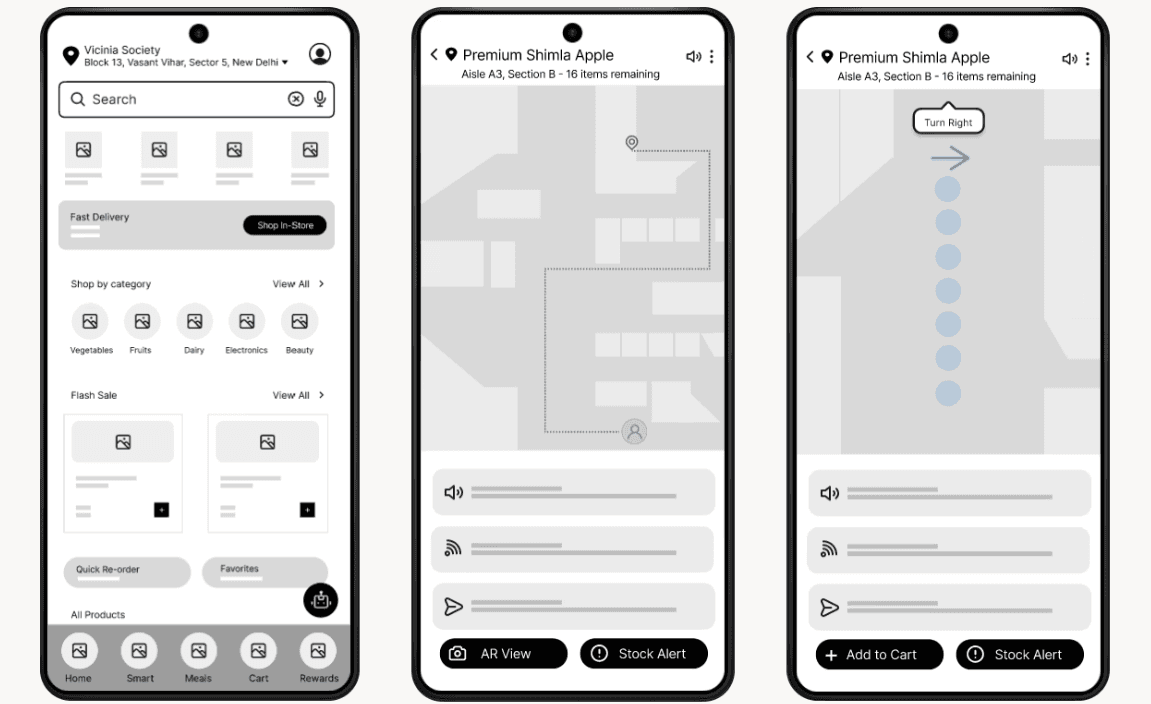
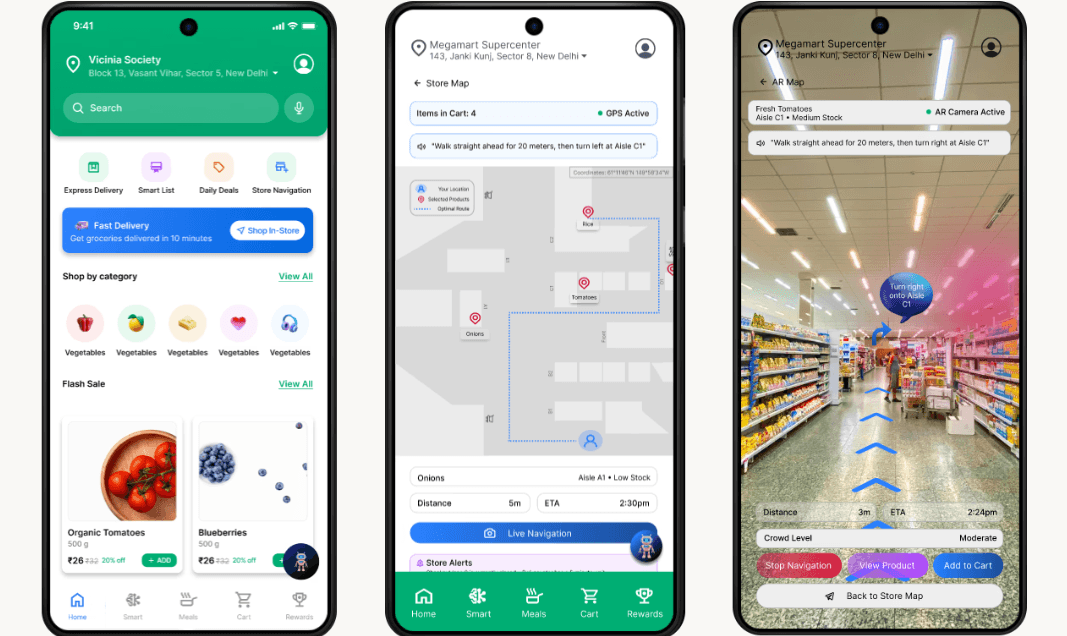
In-store AR-powered grocery shopping navigation system cutting product search time, decision fatigue and easing staff dependency into having a context-aware, spatially intelligent wayfinding.
Ideation Sketches
Mockups
Identified Challenges
Kiranas and mid-format stores change layouts daily and live navigation depends on consistent planograms.
Indian stores even within the same chain vary widely in shelf placement, category grouping and temporary stacking (festival stock, offers, sacks on the floor) plus power/internet fluctuations.
For most Indian retailers margins are thin, basket sizes are small and labor is still cheaper than tech.
In many cases: “Bhaiya, sugar kidhar hai?” is faster than opening an app.
In India, omnichannel leapfrogged to home delivery, dark stores and quick commerce (10–20 mins).
Digitization is focused on payments (UPI), identity (Aadhaar) and logistics (GST, e-way bills)
Future Scope
Non-standard layouts → Use zones, not maps
Frequent shelf changes → No planogram dependency
Low indoor signal reliability → No GPS / BLE required
Staff assisted handheld pickup → Staff becomes part of UX
Low patience for apps → QR + voice, no heavy onboarding
More


