BACK
Zenify - A Wellness App
A Research-Driven Exploration.
This project began as a bold attempt to address factors around eating disorders prevalent in India. Guided by extensive qualitative research, interviews, and data synthesis, I dove deep into the complex social and psychological drivers behind this issue. Each step brought new insights, reframing the problem in unexpected ways revealing deeper emotional and systemic layers.
Although a tangible product or interface never fully materialized, this journey underscored a crucial truth: rigorous research is invaluable. It allows us to deeply understand the human condition before rushing into design, ensuring that any future solution is anchored in real insight and genuine impact.
Research Findings
According to National Institute of Mental Health and Neurosciences survey data, the economic and social impact of eating disorder was estimated to be upwards of $15 billion (INR 1057.8 billion) in 2012, which is comparable to the productivity impact of anxiety and depression, estimated at $17.9 billion (INR 1262.3 billion) in 2010.
As the second-deadliest mental illness, ED disproportionately affects females i.e zonal female basketball players from a local school in Chennai, hindu religion girls, UG female students. Other than that, high-income groups show rising rates whereas low-income groups remain underdiagnosed.
Survivors reported
"Food becomes the only safe way to regulate emotions you were never taught to manage”
“I grew up with very low self-esteem, and while Western celebrity culture was definitely toxic, my body image issues actually started at home. In Indian culture, food is often a meeting point; a hot spot to bring families and body shaming together”
Causes
Physiological hunger to identity-based eating control, body dysmorphia, low self esteem, puberty, history of trauma/abuse, interpersonal conflicts, body dissatisfaction and internalization.
In contrast to Western studies, most patients in India do not exhibit body image disturbances and are unconcerned about their weight loss, even rationalizing their reduced food intake with due explanations. This phenomenon is known as nonfat phobic variant of anorexia nervosa.
Vaidyanathan et al. (2024) Pathoplastic effect where traditional ideals of fairness, marital fitness, and filial piety in dysfunctional family dynamics intersect with Western thinness ideals.
Effects
AN diagnosed in a 42-year-old female with episodes of compulsive fasting for 2 years. the patient was treated with 100 mg chlorpromazine, 100 ml of 25% glucose with vitamin C 500 mg intravenously, 10 injections of liver extract 2 ml intramuscularly biweekly, and 9 sessions of electroconvulsive treatment; followed with recovery signs after 46 days.
Consumption of food alternatives such as isabgol husk, diuretics, laxatives, raw rice/wheat, ash, toothpaste, chalk, brick, clay, mud, paper, eraser, burnt matchsticks with effects including anxious-avoidant-anankastic traits, self-induced psychogenic vomiting, underdeveloped secondary sexual characteristics, excessive exercising, self injurious behaviors, suicidal ideations, disruptive meal patterns and food over-selectivity.
Help Scarcity
Lack of large-scale literature, linguistic diversity challenges, low utilization of treatment services, money-making system, concerns about privacy during hospital visits, varying social circumstances such as treatment facility being for-profit limiting access to those with Medicare or other non-private insurance options.
Affinity Mapping
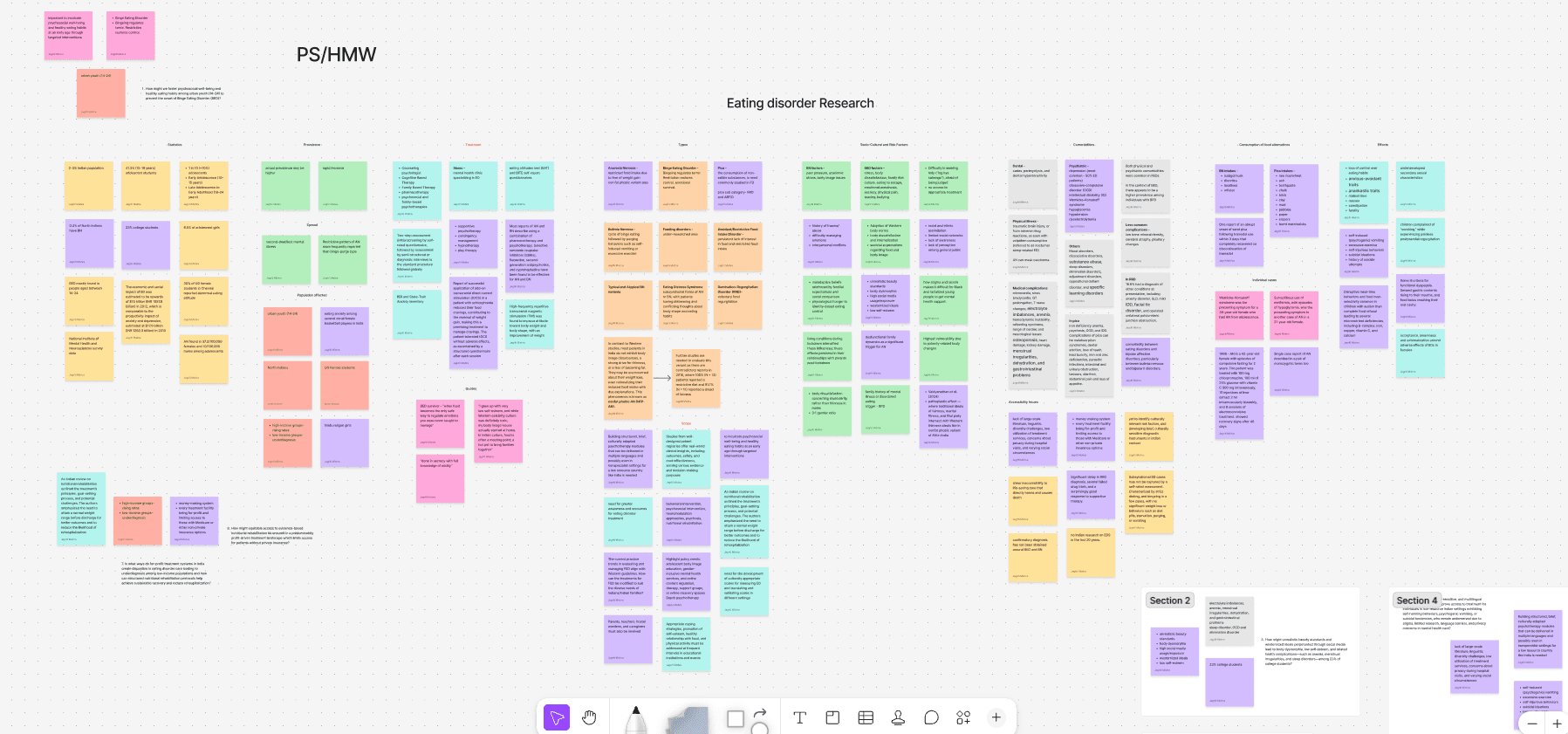
Persona Creation following JTBD framework
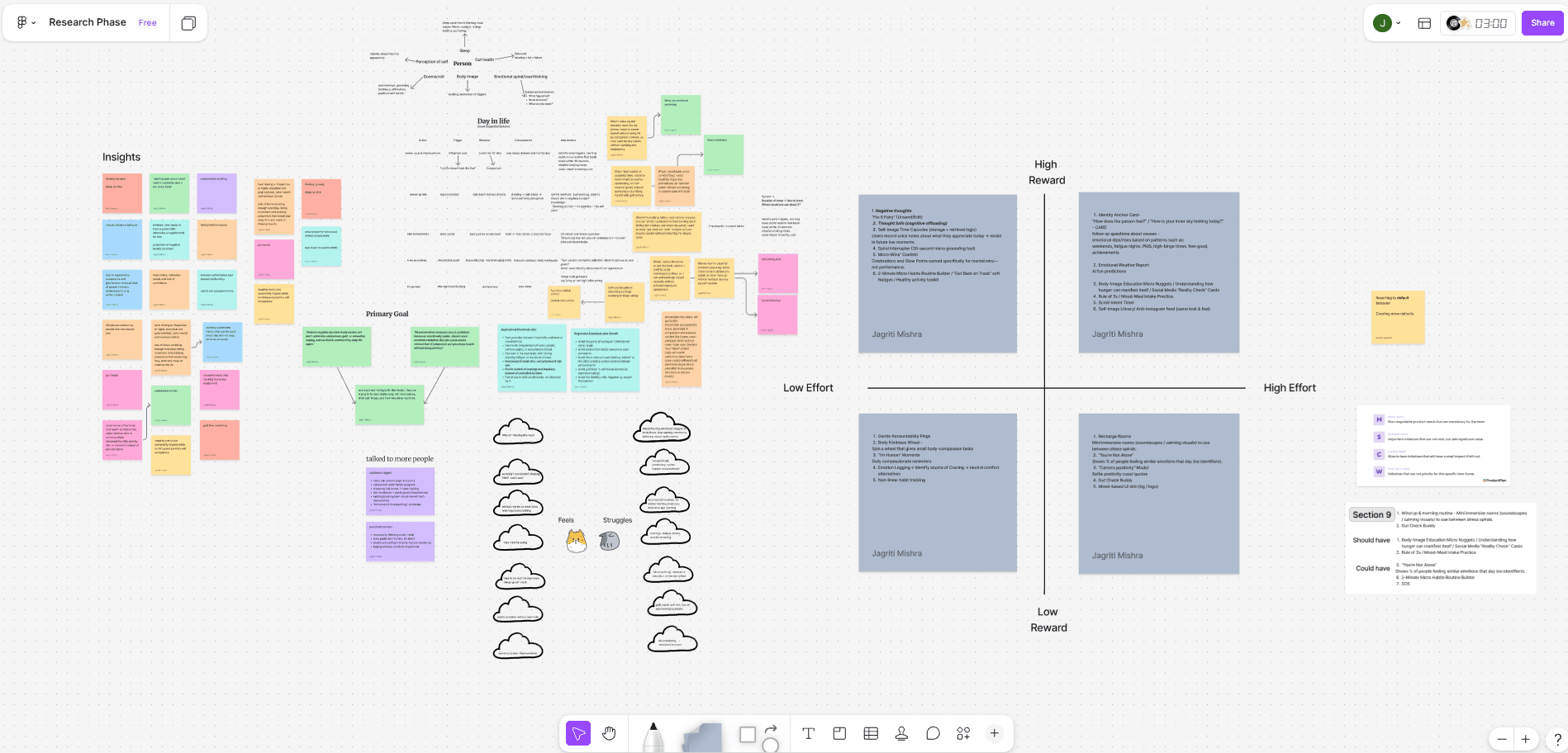
User Interviews around body perception, social media influence and eating habits


Zenify
More


